هذا المحتوى غير متوفر بلغتك بعد، ويُعرض باللغة English.
Fiber networks are no longer confined to clean, controlled environments. They are being deployed on defence and broadcast appilcations, on offshore platforms, and at industrial sites, where dust, dirt, vibration, moisture, and constant handling are part of everyday life. In these conditions, the quality of the connector matters just as much as the quality of the fiber itself.
At Emtelle, working in collaboration with Ridgemount Technologies, we design and manufacture both Physical Contact (PC) and Expanded Beam (EB) connector solutions. While both have a role to play, Expanded Beam, built around Ridgemount’s FBEAM™ alignment technology, delivers the resilience required for harsh-environment applications.
The Limits of Physical Contact
Physical Contact connectors work by bringing two polished fiber end faces into direct contact, allowing light to pass between them with very low insertion loss. In a data center or telecom exchange, this is the gold standard for optical performance.
In the field, the picture changes. The exposed fiber end face is highly sensitive to contamination. Even microscopic dust or moisture can degrade performance, and repeated mating in dirty or high-vibration environments increases the risk of physical damage. Strict cleaning protocols help, but they also add time, cost, and complexity to every deployment.
What Is Expanded Beam Technology?
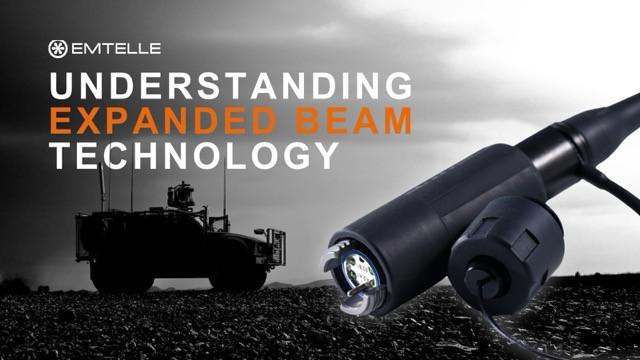
Expanded Beam connectors take a fundamentally different approach. Instead of bringing fibers into physical contact, they use a precision lens placed in front of the optical ferrule. This lens expands and collimates the light beam, sending it across a small air gap before a second lens refocuses it into the receiving fiber.
The beam itself is increased from around 9 microns to more than 250 microns. That change in scale unlocks the technology’s key advantages in harsh environments.

Why It Matters
A larger beam diameter changes the way the connector interacts with the world around it.
- Reduced sensitivity to contamination, because any dust or debris occupies a far smaller proportion of the signal path.
- A non-contact optical interface, removing the risk of end-face damage during mating.
- Improved tolerance to vibration, shock and slight misalignment, supporting reliable performance in mobile and high-stress environments.
- Simplified cleaning and maintenance, with a protected lens surface that is far easier to maintain in the field.
The result is a connector that is built for the realities of deployment, not just the ideal conditions of a test bench.
Choosing the Right Technology for the Environment
There is no single best connector technology. There is only the right technology for the environment.
In controlled installations where achieving the lowest possible insertion loss is the priority, Physical Contact connectors remain the preferred choice. However, in field environments where contamination, vibration, and repeated mating cycles are unavoidable, Expanded Beam technology delivers a level of consistency and reliability that is difficult to match.
The slightly higher insertion loss of EB connectors is more than offset by their resilience in real-world conditions, where reliability is the true measure of performance. Through intensive development, the insertion loss performance of EB connectors continues to move closer to that of telecom-grade products, making Expanded Beam an increasingly viable option across a wider range of applications.
المزيد في هذا الموضوع.
كورنينج تطلق كابل Contour Form المصغّر: 432 ليفاً في قناة مصغّرة بقطر 10 مم
وسّعت كورنينج، عضو المجلس، محفظتها من الكابلات عالية الكثافة بكابل Contour Form™ المصغّر، وهو كابل بسعة 432 ليفاً مبني على منصة ألياف Contour™ بقطر 190 ميكرون.

Emtelle تطلق Rapid Customer Connect لتسريع توصيل العملاء بشبكات الألياف إلى المنازل
أطلقت Emtelle، عضو المجلس، نموذج النشر الحائز على جائزة Rapid Customer Connect (RCC)، الذي يمدّ مسار الألياف مسبقاً حتى حدود العقار، لتكون المنازل والمنشآت جاهزة للتوصيل فور طلب الخدمة.
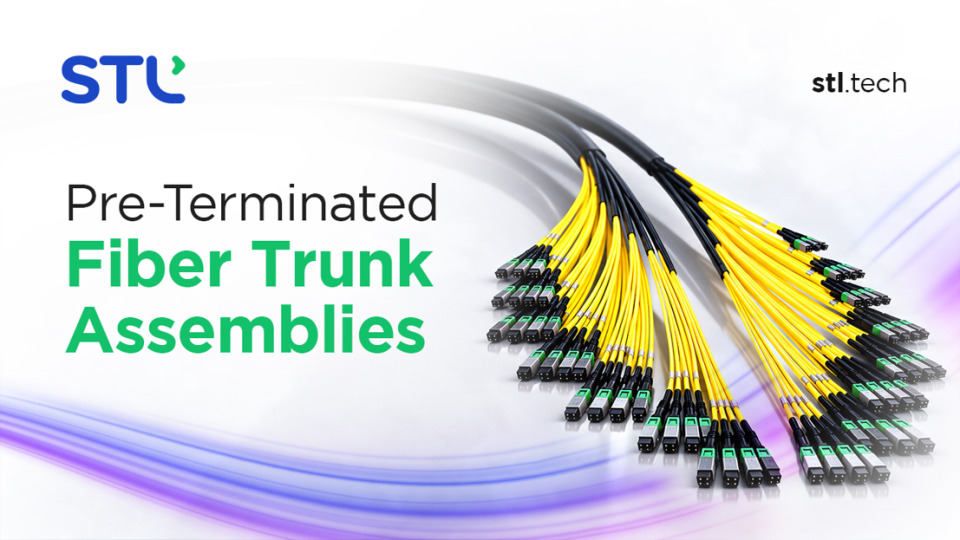
STL توسّع محفظة Neuralis بمجموعات ألياف جذعية منتهية مسبقاً لمراكز البيانات الضخمة
أضافت STL، عضو المجلس، إلى محفظة Neuralis لمراكز البيانات مجموعات ألياف جذعية منتهية مسبقاً للاستخدام الداخلي والداخلي/الخارجي، بسعات من 48 حتى 6,912 ليفاً.