هذا المحتوى غير متوفر بلغتك بعد، ويُعرض باللغة English.
When building a modern fiber network, efficiency, precision, and long-term reliability are key. Yet, more than 85% of projects in the U.S. still rely on traditional cable pulling — often using heavy legacy equipment or even manual labor.
Pulling works, but it is slow, labor-intensive, and places unnecessary strain on the cable.
Professional installers worldwide are now turning to fiber blowing (and in some cases floating) — the modern method that saves both time and money.
With air blowing, a crew of two people can install up to 10,000 ft (≈3,000 m) of cable in less than an hour — a job that might otherwise take a team of 10–15 people several days when pulling.Benefits Compared to Pulling Installation
- Speed – A professional blowing machine can install hundreds or even thousands of meters per hour.
- Fewer people needed – One trained operator can handle the process safely and efficiently.
- Less cable damage – Controlled pushing force and air or water transport protect fragile fiber.
- Longer installation lengths – Blowing enables distances impossible by hand.
- Reduced total cost – Faster installs, fewer workers, and minimized waste lower overall project cost.
- Future-proof network – The duct remains clean and ready for future upgrades.
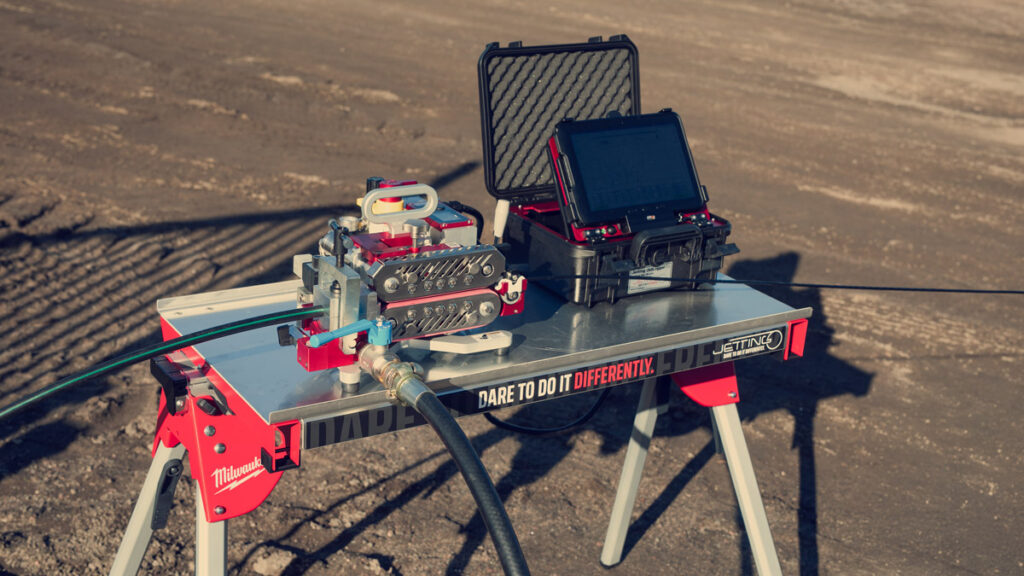
Fiber Blowing — Fast, Controlled, and Efficient
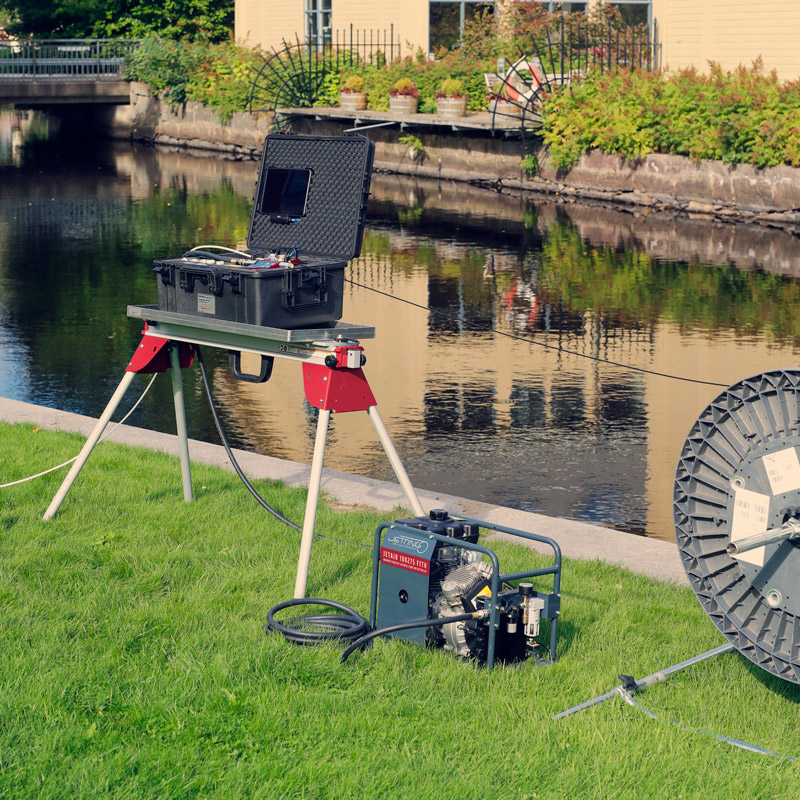
A Jetting machine uses compressed air to carry the fiber cable through the duct while pushing it forward with controlled force. The result: much faster installations, less cable stress, and longer installation distances compared to pulling.
With air blowing, a crew of two people can install up to 10,000 ft (≈3,000 m) of cable in less than an hour — work that could require 10–15 workers and take several days if done by pulling.
All Jetting machines are purpose-built for professional fiber blowing. Compact models — such as TriggAIR and the V0 Series — are powered by electric motors. Larger models — such as V2, V3, and V4 Grizzon — are pneumatically driven.
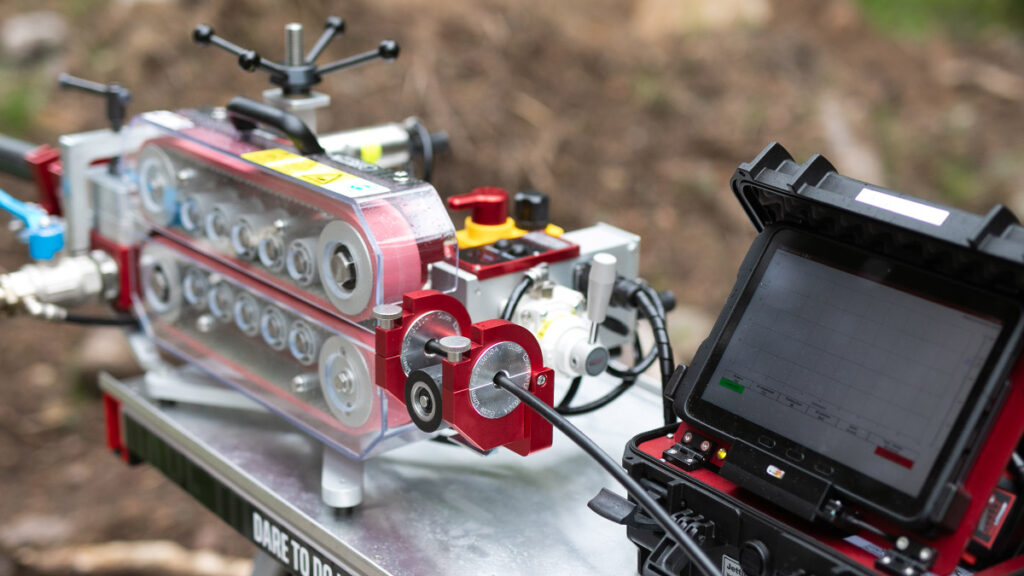
Floating — When Long or Challenging Routes Demand More
In floating installations, water is connected to the machine’s air intake to carry the cable forward. Motors are powered by air, but installation is done entirely using water. This reduces friction and allows cable to be installed easily — even in narrow or slightly compressed ducts — for distances up to 33,000 ft (10 km) in one run.
Jetting’s V2, V3, and V4 systems can all be configured for floating — setup takes about one minute.
Choosing the Right Method
Depending on the project, air blowing or floating methods can be used — both supported by Jetting’s machine lineup. For example:
- Air blowing — Ideal for standard fiber installations.
- Floating — Best for extremely long distances or challenging terrain.
Each method provides a professional, consistent result — every time.
المزيد في هذا الموضوع.
كورنينج تطلق كابل Contour Form المصغّر: 432 ليفاً في قناة مصغّرة بقطر 10 مم
وسّعت كورنينج، عضو المجلس، محفظتها من الكابلات عالية الكثافة بكابل Contour Form™ المصغّر، وهو كابل بسعة 432 ليفاً مبني على منصة ألياف Contour™ بقطر 190 ميكرون.
Emtelle تطلق Rapid Customer Connect لتسريع توصيل العملاء بشبكات الألياف إلى المنازل
أطلقت Emtelle، عضو المجلس، نموذج النشر الحائز على جائزة Rapid Customer Connect (RCC)، الذي يمدّ مسار الألياف مسبقاً حتى حدود العقار، لتكون المنازل والمنشآت جاهزة للتوصيل فور طلب الخدمة.
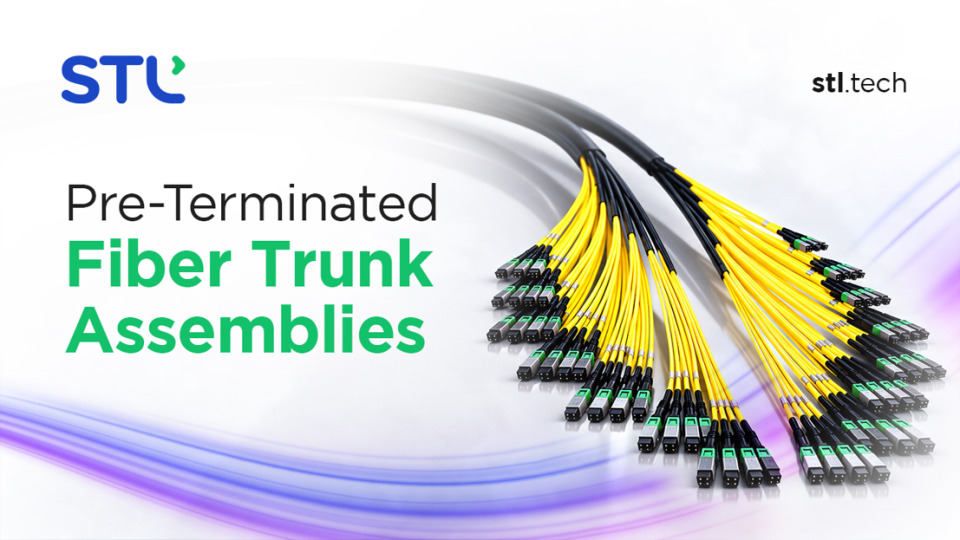
STL توسّع محفظة Neuralis بمجموعات ألياف جذعية منتهية مسبقاً لمراكز البيانات الضخمة
أضافت STL، عضو المجلس، إلى محفظة Neuralis لمراكز البيانات مجموعات ألياف جذعية منتهية مسبقاً للاستخدام الداخلي والداخلي/الخارجي، بسعات من 48 حتى 6,912 ليفاً.