
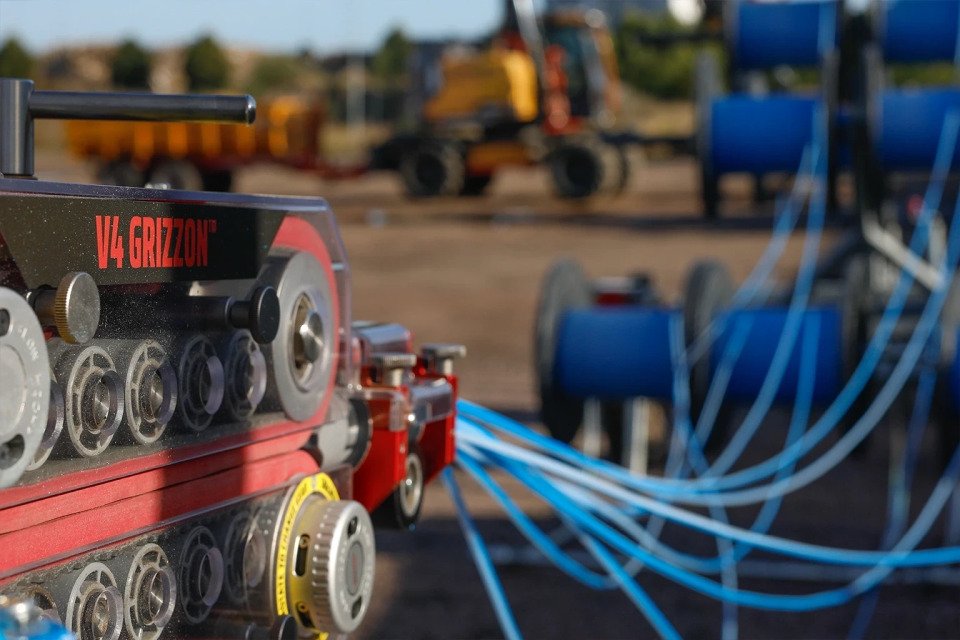
When installing fiber optic cable, pushing force and speed matter. But so do setup time, portability, maintenance and what it actually takes to get the machine running in the field.
Fiber blowing machines are commonly powered either pneumatically or hydraulically. Both technologies can provide the force required for demanding installations, but a pneumatic solution offers some important practical advantages.
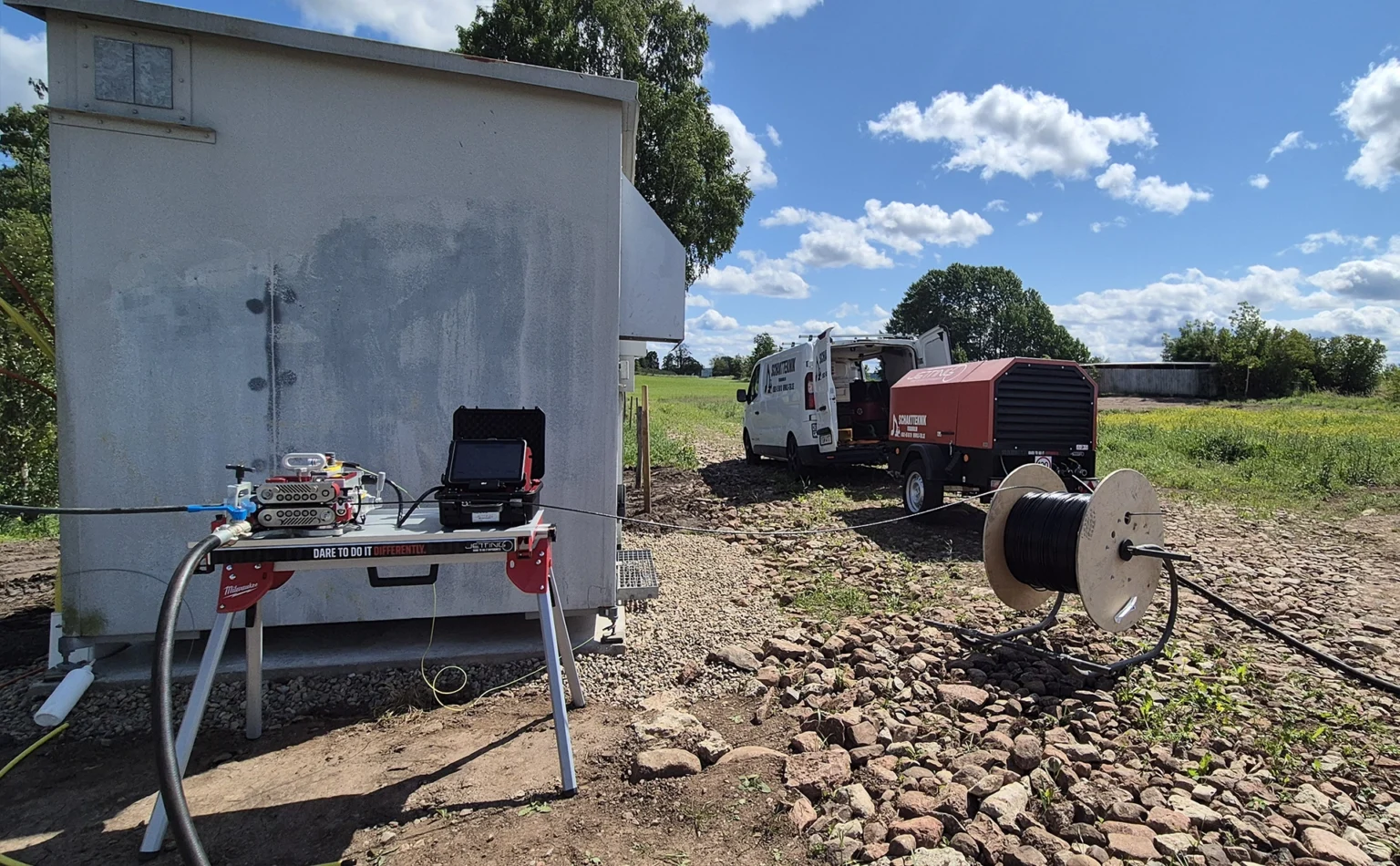
One power source – compressed air
A pneumatic fiber blowing machine uses compressed air not only to create the airflow inside the duct, but also to power the machine itself. This means that the same compressor used for the blowing process can provide the energy needed to drive the cable.
With a hydraulic machine, the installation typically requires an additional hydraulic power source, together with hydraulic hoses and connections. That means more equipment to transport, connect and manage at the worksite.
For a pneumatic machine, the principle is simple:
Connect the compressor. Connect the air. Install the fiber.
Less equipment at the worksite
Every additional component adds another step to the installation process. A separate hydraulic power pack means additional equipment that needs to be transported to the site, unloaded, positioned and connected before the installation can begin.
A pneumatic machine can reduce the amount of equipment surrounding the operator. This is particularly useful when working in locations where space and accessibility are limited, such as roadside cabinets, urban environments or remote installation sites. Less equipment can also make it easier to move quickly from one installation point to another.
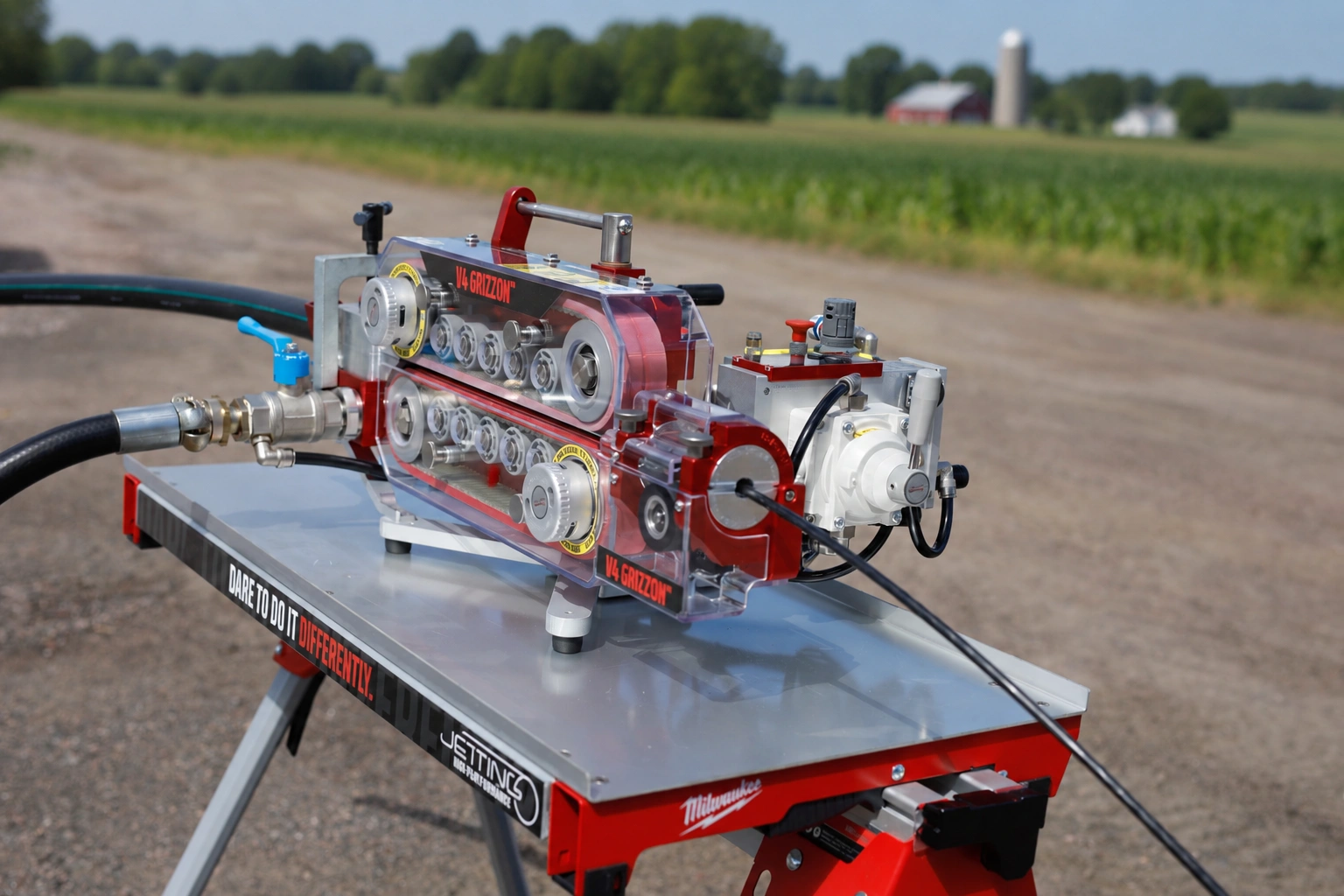
CLEANER OPERATION – NO HYDRAULIC OIL
Hydraulic systems depend on hydraulic oil, pumps, hoses and fittings. These are proven technologies, but a damaged hose or connection can allow hydraulic oil to escape into the surrounding environment. Pneumatic drive systems use compressed air instead of hydraulic oil. If an air hose fails, air is released rather than oil, avoiding the risk of a hydraulic oil spill at the worksite.
There is also the question of fuel. When a hydraulic machine uses a separate fuel-powered hydraulic power pack alongside a fuel-powered compressor, both units need fuel to operate. A pneumatic machine uses the compressor to provide both the airflow inside the duct and the power to drive the cable, removing the need for a separate engine-driven hydraulic power pack. Depending on the equipment and operating conditions, this can help reduce overall fuel consumption and exhaust emissions.
Easier maintenance
A simpler system can also mean fewer components requiring regular attention. Hydraulic systems may require maintenance of the power pack, oil, filters, hoses and hydraulic connections in addition to the fiber blowing machine itself.
With pneumatic operation, the external power system is essentially the compressor that is already required to generate airflow for the fiber installation. This can simplify both daily operation and long-term maintenance.
Built for mobility
Fiber installation equipment frequently needs to move. One day the crew may be working next to a road. The next installation could be inside a building, beside a manhole or several kilometers further along the network.
Reducing the number of separate machines and power systems can therefore have a significant practical benefit. A compact pneumatic fiber blowing machine can be easier to transport, faster to position and quicker to prepare for the next installation.
What about performance?
Choosing pneumatic operation does not necessarily mean sacrificing pushing force. Modern pneumatic fiber blowing machines can generate substantial pushing force while simultaneously using compressed air to reduce friction between the cable and the duct.
The result is a system where pushing and airflow work together to move the cable efficiently through the duct. Depending on the cable, duct, route and installation conditions, this combination can support both high installation speeds and long installation distances.
The advantage is simplicity
Hydraulic systems remain a viable solution for fiber installation and can be well suited to certain applications. But when the required performance can be achieved pneumatically, there is an important question to ask:
Why bring an additional power system if you don’t need one?
Using compressed air to both power the machine and assist the cable through the duct can mean:
Less equipment to transport
Faster and simpler setup
No hydraulic oil
Fewer hoses and external components
Easier movement between installation locations
Reduced maintenance requirements
One primary power source for the complete installation process
At Jetting, we believe professional fiber installation equipment should combine performance with simplicity.
Because in the field, the best solution isn’t only about how much force a machine can produce.
It’s about how easily you can turn that force into installed fiber.

NahjTech Accelerates Iraq’s Digital Connectivity: From Submarine Cable Infrastructure to Cloud and Cybersecurity Partnerships.
As a proud partner of Fiber Connect Council MENA, NahjTech is pleased to share its latest achievements and strategic developments for the October 2026 newsletter.
Fremco Introduces a Unique 3-Year Service-Activated Warranty
At Fremco we have 30 years of experience within the fiber blowing industry developing fiber blowing machines for contractors all over the world.
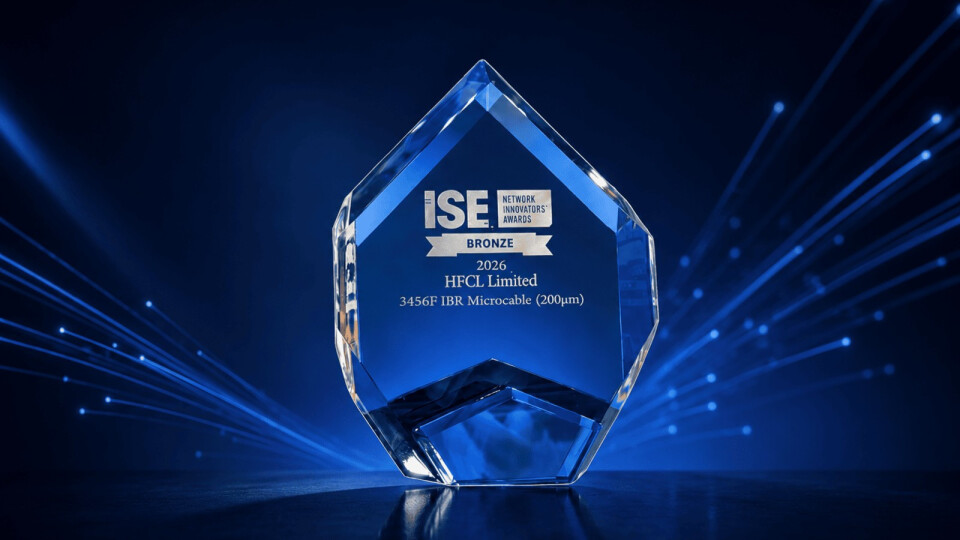
ISE Award Win: Ultra-Dense 3456F IBR Microcable Earns Bronze at the 2026 ISE Network Innovators Awards
HFCL’s microcable delivers up to 83% faster splicing in a compact footprint, now recognised by the industry’s judges.