



Europe is undergoing one of the largest digital infrastructure transformations in its history. Fibre deployment has accelerated dramatically, and billions are being invested to modernise networks across the continent. However, despite this progress, one critical bottleneck remains.
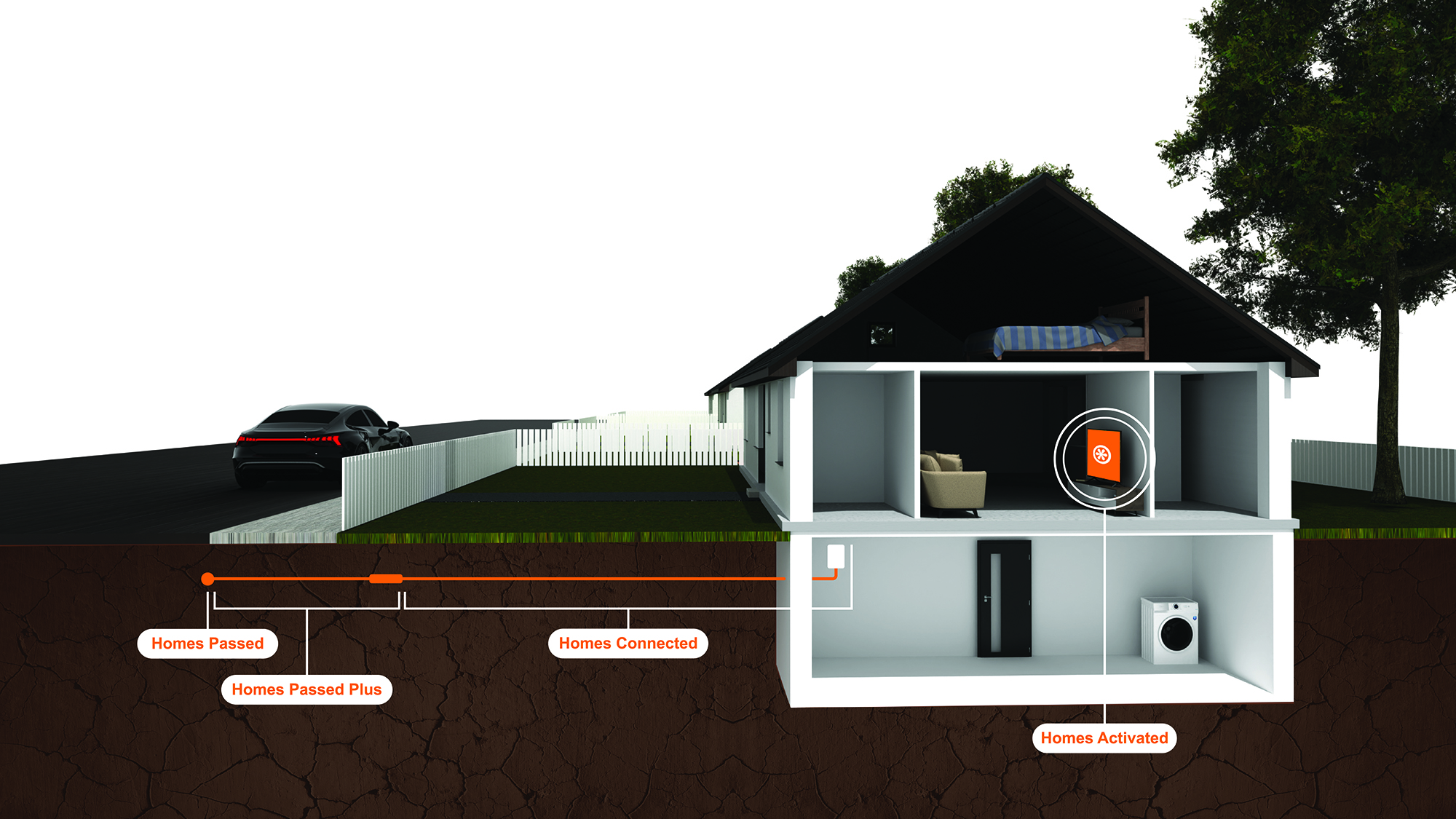
The real test of digital inclusion lies not in how much fibre is deployed, but in how effectively that fibre reaches every home and business. Last-mile connectivity continues to be the most complex part of the network where different operators have varying ideas of Homes Passed regarding the distance between the homes requiring connection and the closed connection point.
This needs to be addressed as homes need to be connected quickly and reliably in this competitive environment. Customer Satisfaction is key, unless we address this strategically, Operators in Europe risk the ‘Customer Experience’ when getting their fibre connection.
Understanding the Last Mile
The last mile refers to the final connection between the network and the end user. It is where installation becomes expensive, disruptive and time-consuming, especially when customer demand rises and upgrades are needed later. As society becomes increasingly reliant on cloud services, digital work, automation and smart living, our infrastructure must evolve from merely “available” to immediately accessible. Put simply, the connectivity we build today must be able to support the digital economy of the next decade.
To achieve this, Europe must take a realistic approach to enabling homes to be connected with fibre. The main investment should be the homes passed. Home connected should be quick, easy and something that can be installed with relative ease by engineers with minimal skills using products that are intuitive, so installing high-capacity fibre directly to the property boundary makes absolute sense as it makes the customer connection as easy as you can make it.
For last-mile networks, the opportunity is simple in concept yet powerful in impact. Fibre routes that are pre-installed, protected, fully tested and ready for activation dramatically change the economics of deployment. Customers gain faster and cheaper access to services. Operators reduce installation time, repeat site visits and operational expenditure. Communities benefit from reduced disruption and the avoidance of repeat groundworks. Ultimately, the industry moves from reactive installations to strategic readiness.
This is the philosophy that guides our work at Emtelle. As a solutions provider in pre-connectorised blown fibre and ducted network infrastructure, our focus has always been on enabling smarter, faster and more sustainable network deployment. We do not look at the last mile as a single product or task; we look at it as an end-to-end system that must deliver long-term value at scale. That means ensuring fibre is placed exactly where it will be needed in the future and ensuring operators can activate service with minimal cost and disruption when demand arrives.
The Homes Passed Plus Model
One example of this is our Homes Passed Plus model, where fibre pathways are pre-installed to the property boundary and excess fibre is securely stored until activation is required. Because the cable is already in place and has been tested in advance, activation becomes splice-free and extremely fast. It reduces construction requirements, shortens connection times and drives a meaningful reduction in carbon footprint by eliminating unnecessary return visits and groundwork.
Innovation for Europe’s Digital Decade
Innovations will play a decisive role in Europe’s digital decade. Smart energy management, digital healthcare, connected education and advanced business supply chains all depend on networks that are not only available but immediately ready to serve users. Building fibre closer today means less disruption tomorrow. Sustainability is not only measured in materials used but also in the infrastructure we avoid building twice.
Europe has a unique opportunity to move from a model of building for today to a model of building for the next generation. Affordable last-mile fibre that is future-proof at scale is not an aspiration; it is an achievable reality when we combine network design intelligence, technical innovation and a willingness to build ahead of demand.
As Solutions Director at Emtelle, I have seen firsthand that when governments, operators, developers and suppliers collaborate with a long-term mindset, connectivity stops being a barrier and becomes an enabler of growth. The decisions we make now will define Europe’s ability to compete, innovate and thrive in the digital era. To close the connectivity gap, we must act early, build smart and ensure every home is ready to connect the moment it needs to.







Leave a comment
You must be logged in to post a comment.